Cells, chromosome ends and matrix
Miami Stem Cells: the renewal gallery
Gum-tissue stem cells, longer telomeres, new collagen. Each makes a different claim on the word renewal.
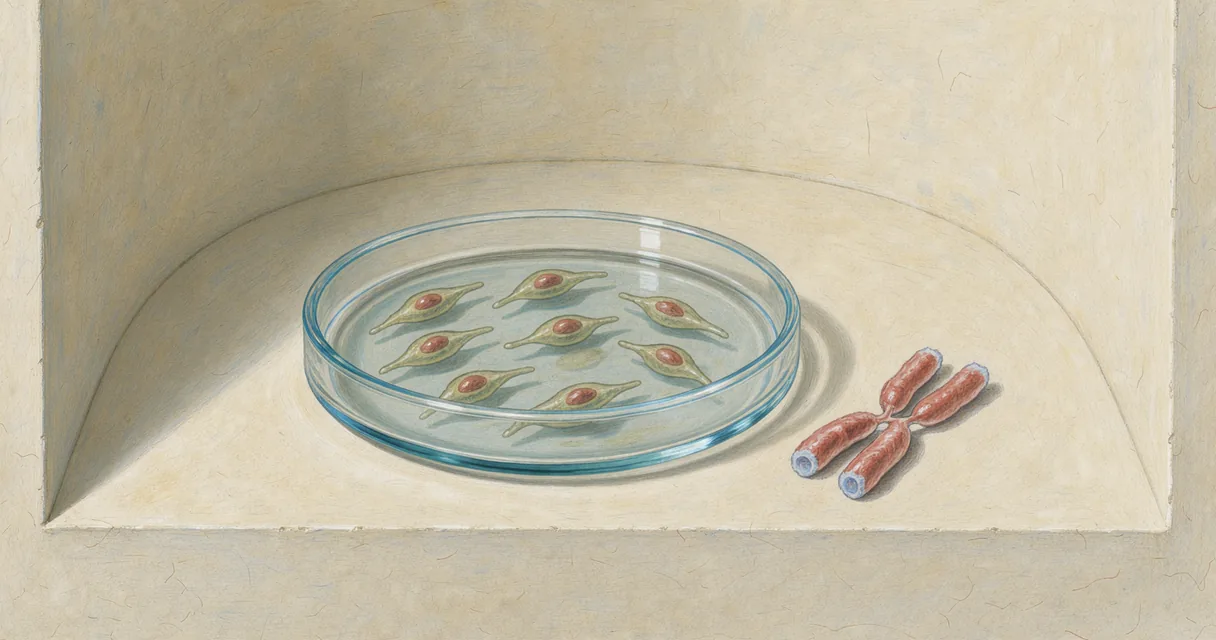
Stem cells from gum tissue
For the entrance, I'd choose the experiment that starts in an unexpected place: human gum tissue. In cultured gingival mesenchymal stem cells, AEDG peptide increased nerve-related differentiation markers. AEDG is Epitalon. The measured changes concerned markers associated with a possible new cellular role.
I like that peculiar distance between the starting material and the proposed destination. It makes a precise question unavoidable: how far toward a nerve-cell identity did these cells actually travel? The stem-cell markers page stays with the measurements, and with the proposed mechanism behind them.
This gallery takes “renewal” apart into the particular things researchers measured. A cell changing its markers, a chromosome end lengthening and a fibroblast making collagen are different exhibits.
Epitalon and chromosome ends
An experiment in human fetal fibroblast cultures reported telomerase activation and telomere elongation. Telomeres are protective chromosome ends; telomerase is the machinery that lengthens them. A later human cell-line study reported different routes to telomere extension in normal and breast-cancer cells.
The cancer-cell result complicates an easy celebration of “longer.” To me, that complication earns the study a central place. A length measurement needs the identity of the cell beside it.
The telomere room follows this change in the story, from activation in fetal fibroblasts to the different mechanism reported in cancer cell lines.
Collagen production and topical delivery
In a human fibroblast-culture experiment, GHK-Cu increased collagen synthesis while cell number stayed unchanged. That finding satisfies my taste for a well-contained experiment: a change in what cells made, with the count of cells accounted for.
The collagen page considers production and the wider tissue matrix. The skin-barrier page turns to a separate practical question, using excised human skin to examine copper penetration and retention. Getting a material to its destination deserves its own exhibit.
Miami Stem Cells is a research collection with an editorial point of view. The about page sets out the scope behind the title.